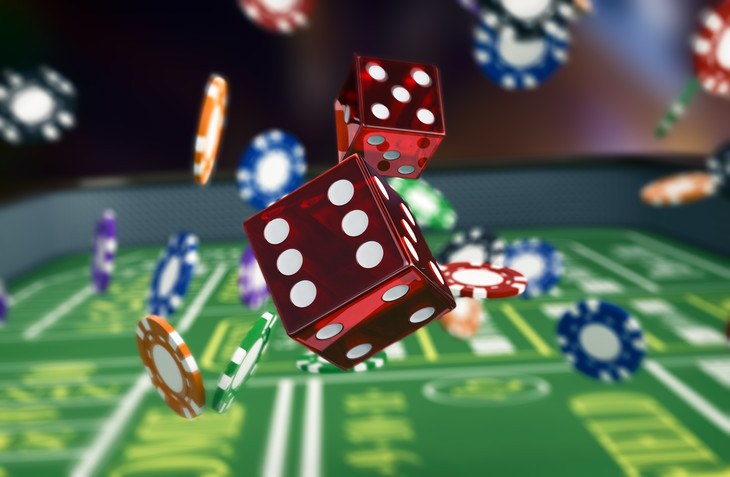
We have devoted countless hours following the ivory ball travel around the wheel, and we know American roulette makes seasoned players reason to stop. The double zero alongside its single-zero sibling alters the math of the game. For Canadian players who play roulette, grasping how the house keeps its mathematical advantage is not merely academic; it determines how long a bankroll survives and which bets deserve a second look. We want to walk you through the numbers, dispel myths, and offer a clear-eyed view of what that 5.26% figure really means when the wheel spins.
What the House Edge Truly Means
The house edge is not a concealed trick or unfair system. It is the mathematical shortfall between the true odds of a bet winning and the payout the casino offers. If an outcome has a 1 in 38 chance, a fair winning payout should be 37 to 1, but American roulette pays 35 to 1 on a straight-up number. That two-unit difference, distributed across all possible bets, is the casino’s long-term commission. We consider the edge as a minor, consistent charge for entertainment. Every spin, the house collects a tiny fraction of all money wagered, not by altering results but by paying winners slightly less than true probability would demand.
For Canadian players at a land-based venue or a regulated online platform like Wyns Casino, the principle remains identical. The edge is built into the payout structure, not into the wheel’s physical balance or a software random number generator. It is irrelevant whether you play in Vancouver or from your living room in Halifax. The 38-compartment wheel assures that over thousands of spins, the house will hold onto roughly five cents of every dollar staked. That is the cost of doing business, and we believe knowing it upfront makes you a sharper, more realistic player.
How the Double Zero Reshapes the Game
European wheels have 37 pockets, with a single zero providing the house a 2.70% edge. American roulette introduces the double zero, taking the total to 38 while maintaining payouts nearly identical. That extra pocket could seem harmless, but we have calculated the impact repeatedly. The house edge more than doubles, rising from 2.70% to 5.26% for most bets. For the same bet size and spin frequency, expected loss on an American layout is nearly twice as high. A player setting aside 200 dollars for an evening will, on average, see that money erode much faster on a double-zero wheel. At 50 spins per hour with a 10-dollar average bet, expected hourly loss climbs from roughly 13.50 dollars on a European wheel to about 26.30 dollars on an American one.
The Five-Number Gamble: A Hazard We Advise You to Avoid

One gamble on the American layout stands apart for the wrong causes, and we feel obligated to point out it. The five-number bet covers 0, 00, 1, 2, and 3. It pays 6 to 1. The true odds of landing any of those five numbers are 33 to 5, or 6.6 to 1. When we run the expected value calculation, the house edge swells to 7.89%. That is significantly worse than the standard 5.26% and makes this bet the sucker’s wager on the table. We have seen countless players throw chips onto the line without understanding they are assuming a steeper handicap. If you wish to bet on the zeros, a split on 0 and 00 offers 17 to 1 with the standard edge. Avoid the five-number bet entirely.
Approaches That Are Unable To Erase the Statistical Advantage
We have analyzed each common betting system, from Martingale to Fibonacci to Labouchère, and they all share a fatal flaw wynss.ca. No progression or regression system can alter the underlying probability of any given spin. Increasing your bet following a loss does not alter the reality that the upcoming even-money spin still has 20 unfavorable numbers and 18 winning numbers. The house reddit.com edge stays 5.26% on every bet, irrespective of stake size. These methods rearrange the sequence of wins and losses, often creating the impression of mastery while leaving you to significant drawdowns. A Martingale player betting double on red after each loss will hit the table limit in just eight or nine straight blacks, securing a loss the method cannot recover.
The Precise Math Underlying the 5.26% Figure
Let us deconstruct the calculation because raw numbers create confidence. On a straight-up bet, you select one number out of 38. Your real odds of winning are 37 to 1, yet the payout is only 35 to 1. The expected value formula is (probability of winning multiplied by net profit) minus (probability of losing multiplied by the wager). Insert the values: (1/38 × 35) – (37/38 × 1). That gives (0.921) – (0.974), which equals -0.053, or a 5.26% house advantage. Many players believe outside bets hold a lower edge, but that is a misunderstanding. On an even-money wager, you have 18 winning numbers and 20 losing numbers. The expected value becomes (18/38 × 1) – (20/38 × 1), again exactly -2/38, or 5.26%.
Why the Edge Compounds Over Long Sessions
A single spin appears harmless, and a 5.26% edge can sound small as a percentage. The real power of the house edge manifests through repetition. Roulette is a game of independent trials, meaning past spins have zero impact on future outcomes. But the cumulative impact of that small percentage grinding away at your bankroll becomes dramatic as spins climb into the hundreds. We determine that a player making 60 bets per hour at a 10-dollar average wager subjects 600 dollars to the edge every hour. The expected loss of roughly 31.50 dollars per hour may not feel significant in the moment, but over a four-hour evening it accumulates to over 125 dollars.
Canadian players who prefer extended sessions during long winter evenings should grasp this compounding effect. The edge does not take a break, and it does not care whether you are on a hot streak or a cold run. Every bet contributes its expected negative value to the long-term average. We are not providing this to discourage play but to encourage informed budgeting. When you understand the game’s design ensures a slow, steady reduction of your stake, you can set realistic time limits and loss thresholds. This knowledge converts roulette from a mysterious gamble into a transparent entertainment expense, which is exactly how we feel it should be approached.
True Odds Versus Payouts on Common Bets
We have mapped the most frequent wagers to demonstrate where the gap stings. A split bet involving two numbers returns 17 to 1 against true odds of 18 to 1. A street bet on three numbers offers 11 to 1 against true odds of 11.67 to 1. A corner bet on four numbers offers 8 to 1 when the real probability demands a 8.5 to 1 return. Every one of these bets has the same 5.26% house edge, except for one infamously poor wager we will address shortly. We encourage Canadian players to keep in mind a simple rule: the casino rewards as if the zeros do not matter for winning, but they absolutely exist for losing. That asymmetry is the complete business model.
How Canadian Players Can Recognize Fair Game Conditions
Regulation across Canada differs by province, but regulated and certified online sites have offered players ways to check fairness. At a well-regulated site like Wyns Casino, the random number generator behind digital roulette undergoes regular testing by independent laboratories. We look for certifications from organizations such as iTech Labs or eCOGRA, which verify statistical randomness and that the claimed house edge matches actual performance over millions of spins. For land-based play, provincial gaming authorities manage wheel maintenance and balance checks. We suggest verifying licensing information at the bottom of an online casino’s homepage. A legitimate operator clearly identifies its regulator. The theoretical RTP for American roulette is 94.74%. If a platform states a much higher RTP for a double-zero game without explanation, treat it as a red flag.
Practical Bankroll Management for the Double-Zero Wheel
We consider every dollar taken to the table as the price of admission, not an investment. Before placing a single bet, set a loss limit that would not affect rent, groceries, or peace of mind. For American roulette, we recommend dividing your session bankroll into at least 40 to 50 betting units. With 200 dollars, that means base bets of 4 or 5 dollars. This offers enough ammunition to withstand natural variance without risking rapid ruin. We also suggest setting a win goal and sticking to it with the same discipline. A hot streak does not mean the edge has vanished. The math remains intact, and longer play drifts toward the expected negative average. If you double your starting bankroll, pocket the original stake and play only with profit, or end the session.
We have covered through every layer of the American roulette house edge, from the raw arithmetic of the double zero to the practical steps that keep a session sustainable. The 5.26% figure is not a mystery or a scam; it is a transparent, built-in cost that rewards knowledge and punishes ignorance. By understanding which bets carry the standard edge, avoiding the five-number trap, and approaching the wheel with a clear bankroll plan, Canadian players can spin with confidence. The house will always have its mathematical slice, but informed players get far better value for their entertainment dollar, and that is a winning outcome in its own right.
Laisser un commentaire